 EN
EN  ID
ID 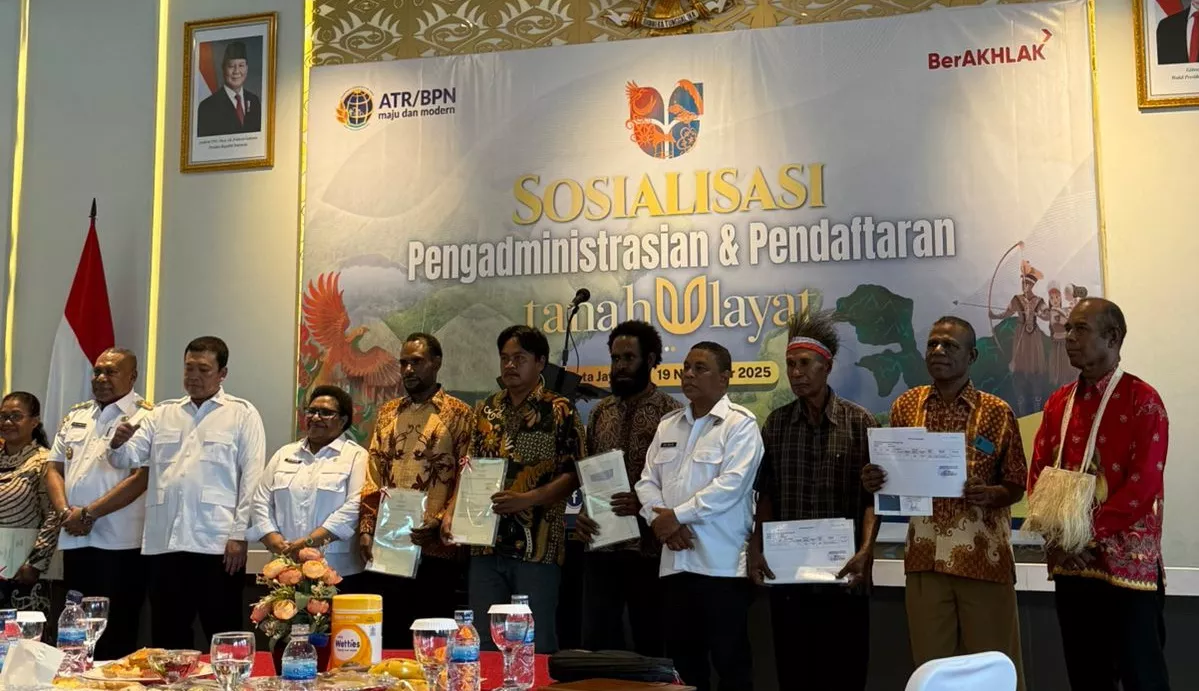
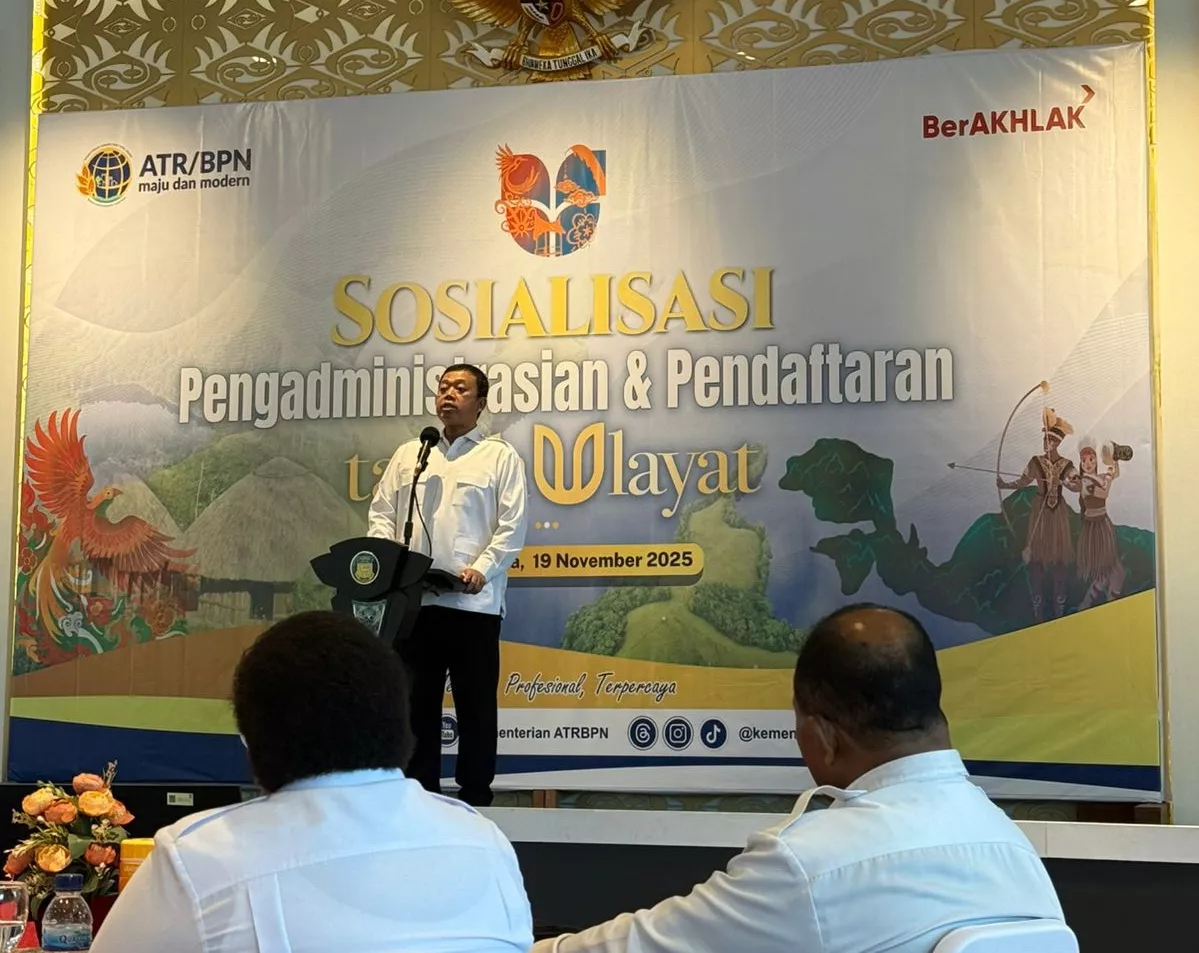
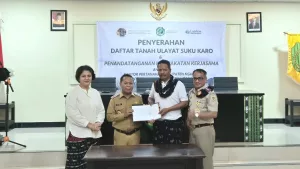
19 November 2025 marked a historical moment for the Patai Tribe and the Rematobi tribe in Yapen Island, as they received a copy of the Customary Land Register (DTU) from the Minister of Agrarian Affairs and Spatial Planning/National Land Body (ATR/BPN) during the event on Socialization of Customary Land Administration and Registration in Papua Province and Customary Territory Mapping. This event was attended by the Minister for Agrarian Affairs and Spatial Planning/Head of National Land Body, Nusron Wahid, together with the several provincial government in Papua ie Papua Province, South Papua Province, Central Papua Province and Papua Pegunungan Province, as well as government of the regencies of each province, and the Papua People’s Assembly (Majelis Rakyat Papua/MRP). This event is the continuing commitment from the government to recognise and protect the customary land of indigenous peoples. This significant achievement is the result of the implementation of the Decree of the Minister for Agrarian Affairs and Spatial Planning Number 14 Year 2024 regarding the Implementation of Land Administration and Customary Land Registration (PermenATR/Ka BPN No. 14/2024), especially carried out by the Land Agency of Yapen under coordination of Land Office of Papua Region, in collaboration with Landesa Indonesia.
Permenatr/Ka BPN No. 14/2024 regulates customary land administration and registration, which positions customary land owned and controlled by indigenous people for hundreds of years to be recorded in the national land database. Aside from it, this policy can strengthen and protect customary rights of indigenous people, which will no longer be recognised as vacant/unclaimed land.
In general, the main path offered by this policy to recognise and protect customary rights, first, is in form of land administration on DTU. Second, if indigenous peoples agree, the process can proceed to land registration with the right to manage (HPL) for communal customary land, and to collective ownership (HM) for customary land that has been separated into smaller units within the indigenous organisation (e.g., clan). In the DTU context, PermenATR/Ka BPN 14/2024 emphasises the government’s obligation to administer lands with specific characteristics of customary land. Meanwhile, the further process of land registration with HPL is another option for indigenous people, particularly those who have formal recognition as indigenous subjects under a local government decree or local regulation. Thus, both mechanisms aimed to strengthen the collective rights of indigenous people, particularly regarding customary land, which accommodates diverse tenurial systems and social conditions within communities.
Although PermenATR/Ka BPN No. 14/2024 offers an opportunity to strengthen and protect customary rights, its implementation needs to be strengthened. According to Landesa’s findings in Papua and East Nusa Tenggara provinces, the common challenge in administering customary land is the need for a thorough, participatory, and inclusive socialisation process for indigenous peoples. The customary land administration in several areas is required to be grounded on Free, Prior, Informed Consent (FPIC) principles so that the decision to administer (or not to administer) the customary land to DTU or to continue it to register land for HPL is based on a collective decision that has less conflict potential in the future, as the decision is made under sufficient time and involves as many elements in the communities.
To address the challenge, Landesa Indonesia has been facilitating several processes to administer and register customary land through a bottom-up process in collaboration with the land office at the local level, including in Yapen Regency, Papua Province. Based on the land area map administered on 22 September 2025, the land office in Yapen has administered customary land on DTU for the Patai Clan and the Rematobi Clan, totalling around 4.6 hectares and 3.3 hectares, respectively. Both were facilitated by the land office in Yapen until the administration in DTU in accordance with the collective decision from both clans. Aside from this, Landesa Indonesia also supports the effort from the Ministry of Agrarian Affairs and Spatial Planning to monitor and evaluate the administration and registration of customary land to achieve the planned target, with quality that fulfils indigenous peoples’ rights.
As the civil society organisation that supports government efforts to protect customary land, Landesa Indonesia has documented the process of administration and registration of customary land conducted by the Ministry of Agrarian Affairs and Spatial Planning before the enactment of PermenATR/Ka BPN No. 14/2024. In collaboration with National Geographic Indonesia and World Resources Institute Indonesia, Landesa Indonesia captured a glimpse of the process and progress of customary land administration and registration of indigenous communities in Papua Province, ie Sawoi Hnya, and in West Sumatera Province, ie Nagari Sikabu-kabu and Nagari Kamuyang. This documentary video describes the process of customary land administration and registration, as well as the difference between DTU and HPL.
Coinciding with this event, the documentary video was officially launched in the presence of the Minister for Agrarian Affairs and Spatial Planning/Head of National Land Body and other participants. Through this video, the public is expected to receive sufficient and thorough information about customary land administration and registration.
Therefore, Landesa Indonesia perceives the customary land administration and registration program as a significant effort taken by the Ministry for Agrarian Affairs and Spatial Planning and should be conducted collaboratively with civil society organisations to achieve more impactful protection of customary land.
Contact for further information:
- Yulia Langowuyo (081237343580)
- Yahya Zakaria (085726186561)

One comment
Pingback:
cefixime